Commercial kitchen gas interlock systems
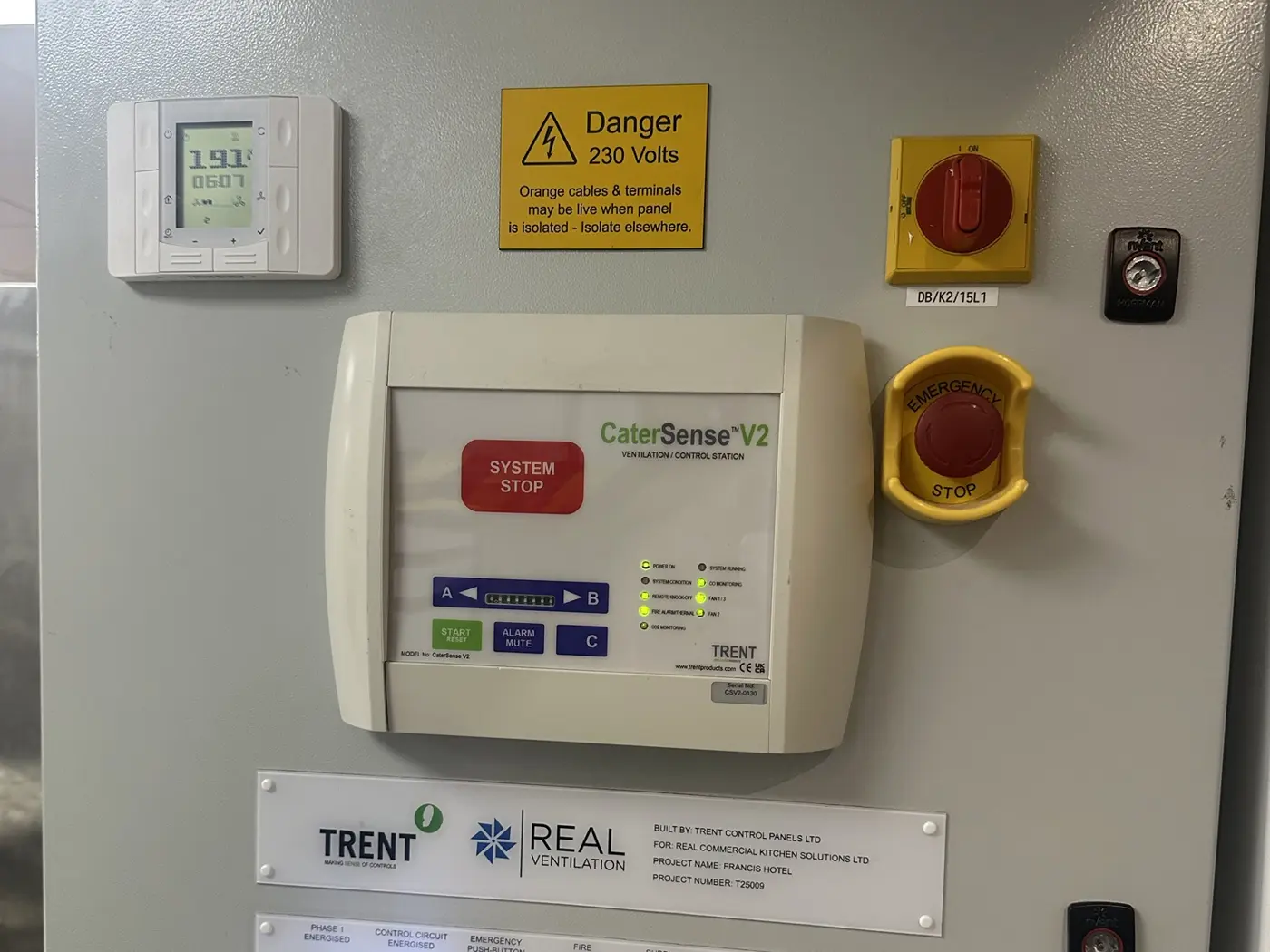
A gas interlock links the kitchen gas supply to the ventilation, so gas appliances cannot be used unless the ventilation is running. We supply, install and test interlock systems with our specialist partner S&S Northern.
No ventilation, no gas
If a kitchen extract fails while gas appliances are running, combustion products such as carbon monoxide can build up quickly. BS 6173 sets out the requirement for an interlock between the ventilation and the gas supply in commercial catering, and IGEM/UP/19 covers how interlock systems are designed and applied.
Interlocks prove the ventilation is working, by airflow sensing or by monitoring the fans, and shut the gas supply if it is not. Some systems also monitor carbon dioxide in the kitchen and can adjust extract rates.
- Airflow or fan-proving interlocks linked to a gas solenoid valve
- CO₂ monitoring with alarms where required
- Integration with new or existing ventilation controls
- Testing and documentation at commissioning
Gas interlock FAQs
Is a gas interlock a legal requirement in a commercial kitchen?
BS 6173 requires an interlock between the mechanical ventilation and the gas supply for commercial catering installations, and gas engineers work to it. In practice, a compliant installation needs one.
Can a gas interlock be added to an existing kitchen?
Yes. We can fit an interlock to existing ventilation, provided the system is working and can be proved. We check the ventilation as part of the survey.
What does CO2 monitoring add?
A CO₂ sensor measures air quality in the kitchen, alerts staff if levels rise and can be used to adjust extract rates or shut off the gas supply.
Who supplies your interlock systems?
We work with S&S Northern, a specialist in commercial kitchen gas and solid-fuel interlock systems.
Related projects and services
Need an interlock fitted?
Tell us about the kitchen and the existing ventilation.