Commercial kitchen extraction systems
Everything between the canopy and the open air: grease ductwork, fans, attenuation, fire-rated risers and the discharge. Designed as one system, so it captures, moves and releases the air the way the calculations say it should.
Designed from canopy to discharge
A canopy is only as good as the system behind it. Undersized ductwork, a poorly chosen fan or a long run with no access panels will undo a well-designed canopy. We size the full extract route for the appliances, the building and the discharge point, then supply and install it ourselves.
- Grease extract ductwork with access for cleaning along its length
- Extract fans selected for the system resistance, with margin for future changes
- Attenuation to control noise inside and at the discharge
- Fire-rated ductwork where the route passes through other parts of the building
- Odour control stages where planning or neighbours require it
- Discharge stacks positioned to disperse what remains
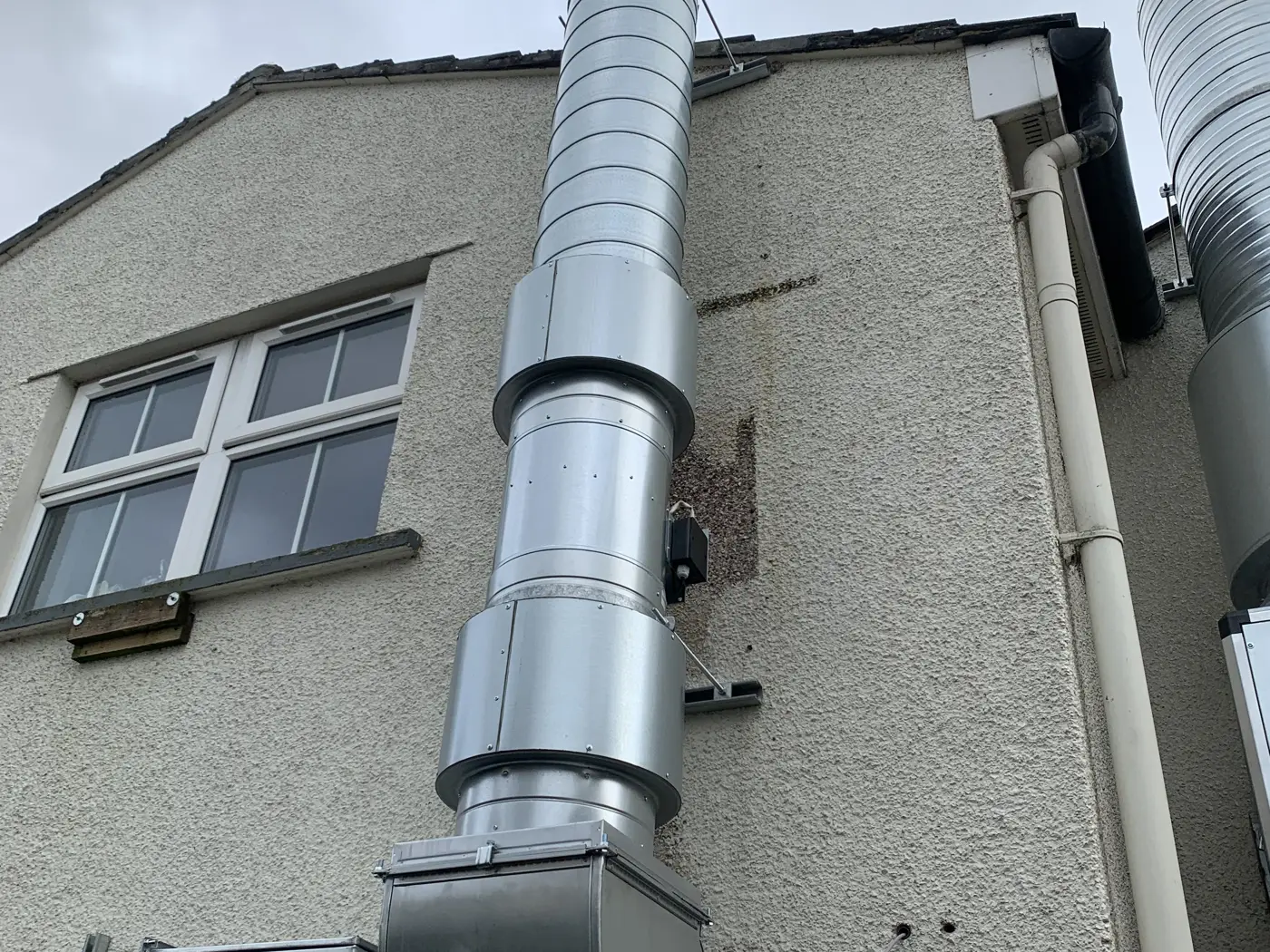
Ductwork and fans to recognised guidance
| Item | Guidance |
|---|---|
| Ductwork construction | Low pressure Class A to BESA DW/144, minimum 0.8 mm |
| Extract velocity, main runs | 6 to 9 m/s |
| Extract velocity, branches | 5 to 7 m/s |
| Cleaning access | Grease-tight access panels at 2.0 m centres |
| Fan selection | Design resistance plus 10% airflow and 20% pressure margin |
| Solid-fuel canopies | Fan motor out of the airstream, metal impeller blades |
| Fire | Ductwork should not pass through fire barriers; fire-rated ductwork where it must |
Source: EMAQ+ Control of Odour and Noise from Commercial Kitchen Exhaust Systems (2018), best practice summary. Systems are also designed to BESA DW/172 and to allow cleaning to TR19 Grease.
Extraction system FAQs
What size ductwork does a commercial kitchen need?
It depends on the extract volume and the route. Best practice keeps extract velocities around 6 to 9 m/s in main runs and 5 to 7 m/s in branches, which balances duct size against noise and pressure loss. We calculate it for each job.
How often does kitchen extract ductwork need cleaning?
It depends on how heavily the kitchen is used. EMAQ+ guidance ranges from every 2 to 3 months for heavy, long-hours grease production up to 12 months for light use. We design in access panels so cleaning to TR19 Grease is possible along the whole route.
When is fire-rated ductwork needed?
When the extract has to pass through other parts of the building rather than discharging directly. Fire-rated ductwork is specified for stability, integrity and insulation so a duct fire cannot spread through the building.
Can you upgrade an existing extract system?
Yes. We carry out planned upgrades on existing systems, such as replacing or upgrading fans, refurbishing air handling units and adding access panels so ductwork can be cleaned. We survey first so the upgrade suits the kitchen as it is used today.
Can you replace a fire-damaged extract system?
Yes. We survey what is left, redesign to current standards and replace it, working with the insurer where needed. See George and Dragon in our projects.
Related projects and services
Extract system to design or replace?
Send us the layout, the route to outside and the equipment schedule.