Kitchen supply and make-up air
Every cubic metre of air extracted has to be replaced. Without enough replacement air the extract underperforms, doors slam and gas appliances can be affected. We design supply air that arrives quietly, at low velocity and without draughts, with heating and cooling options to suit the budget.
Balanced air for a working kitchen
Best practice is for a dedicated make-up air system to supply roughly 85% of the extract volume, keeping the kitchen slightly negative so cooking smells stay in the kitchen. How that air is delivered matters as much as how much: too fast and it disturbs the capture at the canopy and chills the pass.
- Supply plenums built into the canopy for low-velocity delivery close to the cooking line
- Bespoke supply air walls for front-of-house and tight spaces
- Air handling units with filtration, heating and DX cooling
- Electric heater batteries with thyristor control for fine temperature control
- Filtered return air where the design allows
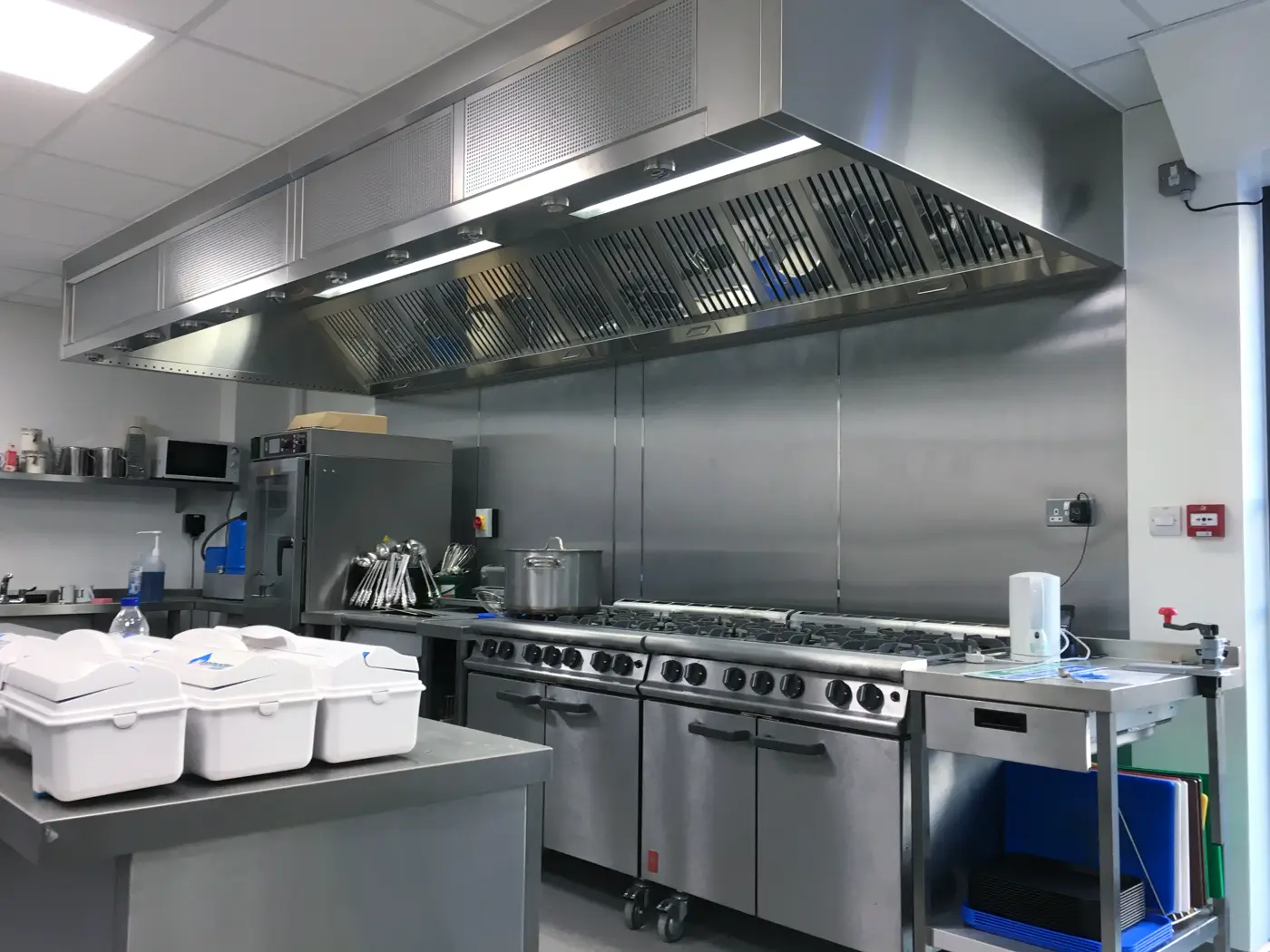
What we design the supply system to
| Item | Guidance |
|---|---|
| Make-up air | Approximately 85% of extract, keeping the kitchen slightly negative |
| Supply velocity, main runs | 6 to 8 m/s |
| Supply velocity, branches | 4 to 6 m/s |
| Air change rate | Minimum 40 per hour (canopy and general extract) |
Source: EMAQ+ Control of Odour and Noise from Commercial Kitchen Exhaust Systems (2018), best practice summary. Kitchen temperatures in use depend on outside conditions, the cooking load and whether heating or cooling is included in the specification.
Supply air FAQs
How much make-up air does a commercial kitchen need?
Best practice is a dedicated supply of about 85% of the extract rate. The small shortfall keeps the kitchen under slight negative pressure so smells and heat do not spread into the rest of the building.
Does supply air need to be heated or cooled?
It is optional, and it is a choice about comfort and budget. Untempered supply air follows the outside temperature, so the kitchen will be colder in winter and warmer in summer. A heater battery tempers it in winter, and an air handling unit with DX cooling can also take the edge off summer heat. We will set out the options and what each one means, so you can decide what to include.
Can supply air come through the canopy?
Yes. A supply plenum built into the canopy introduces air at low velocity close to the cooking line, which suits many kitchens. Larger kitchens or front-of-house spaces may need a separate system.
What happens if a kitchen has no make-up air?
The extract cannot move its design volume, air is drawn in through doors and gaps, gas appliance combustion can be affected and heat builds up in the kitchen. It is a common fault on older kitchen systems.
Related projects and services
Supply air to design or upgrade?
Tell us about the kitchen and the existing system, and which options you want priced.